

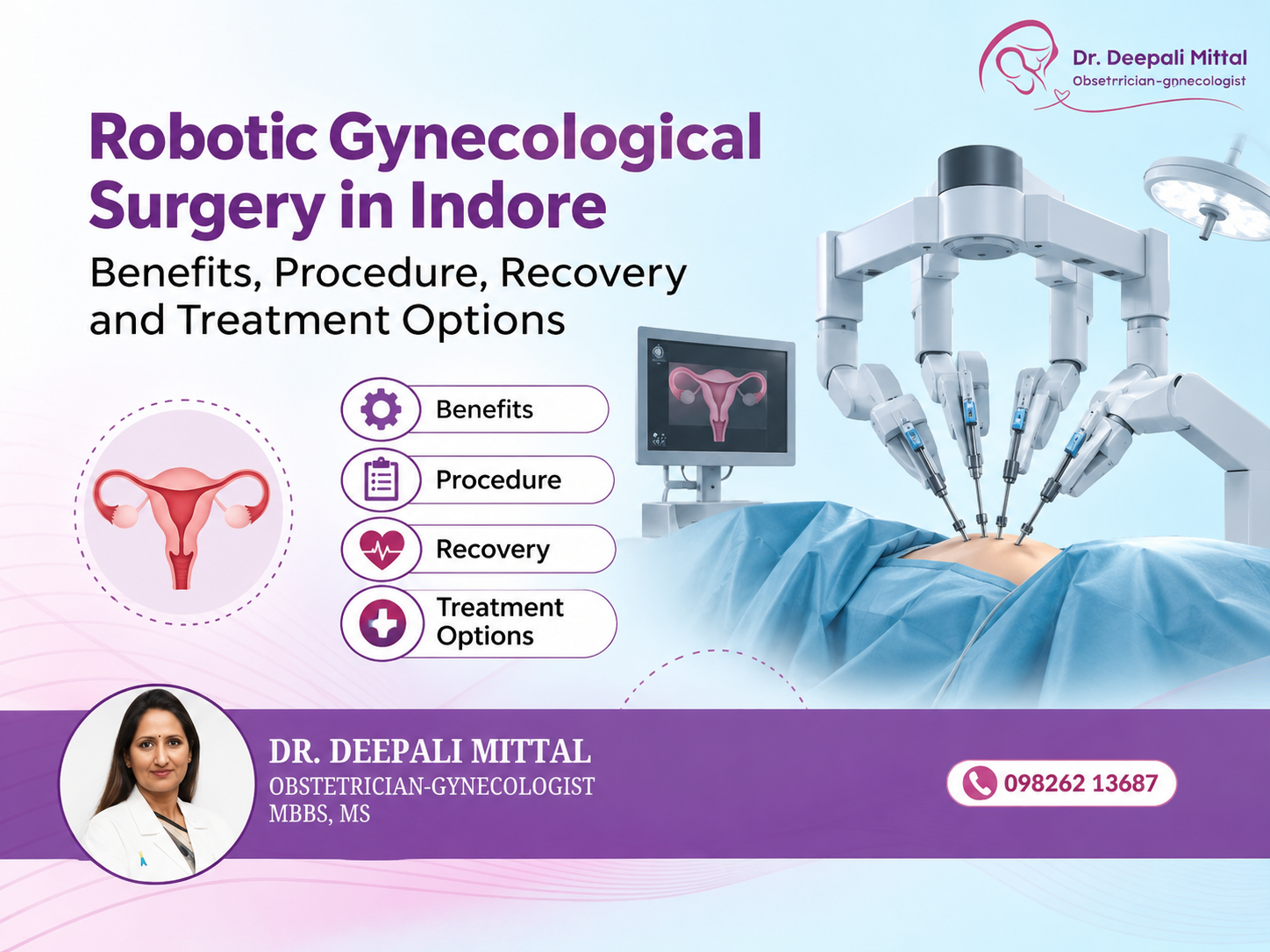




Women may experience gynecological conditions such as uterine fibroids, endometriosis, ovarian cysts and other problems that sometimes require surgical treatment. Advances in medical technology have introduced different surgical approaches designed to help doctors perform complex procedures with precision. One such approach is robotic-assisted surgery, which is used in selected gynecological procedures.
Robotic Gynecological Surgery in Indore is an important topic for women who want to understand modern surgical options, how these procedures work and what recovery may involve. Robotic-assisted surgery uses specialised instruments controlled by a trained surgeon. The technology can provide a magnified, three-dimensional view of the surgical area and allow controlled instrument movements. However, not every patient needs robotic surgery, and its suitability depends on the medical condition, surgical history and the treating specialist’s assessment.
Women researching Robotic Surgery in Indore should understand the differences between robotic-assisted, laparoscopic and open surgery before making a decision. Dr. Deepali Mittal’s gynecological services and the availability of a particular surgical technique should be confirmed directly with the clinic before planning treatment.
What Is Robotic Gynecological Surgery in Indore?
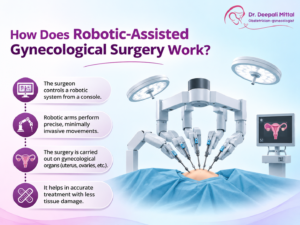
Robotic Gynecological Surgery in Indore refers to gynecological procedures performed using a robotic-assisted surgical system. The surgeon controls the system from a console, guiding specialised instruments inserted through small incisions. The robot does not operate independently; the surgeon remains in control throughout the procedure.
This approach may be considered for selected operations involving the uterus, ovaries or other pelvic structures. Depending on the diagnosis, the procedure may involve removing uterine fibroids, performing a hysterectomy or treating certain cases of endometriosis.
Robotic-assisted surgery is generally a minimally invasive approach, but it is not automatically the best option for every patient. A specialist considers the expected benefits, possible risks, available equipment, the surgeon’s experience and alternative treatment methods before recommending a procedure.
Women looking for Robotic Gynecological Surgery in Vijay Nagar, Indore should ask the clinic whether robotic-assisted procedures are available locally or whether a referral to another facility is required.
How Does Robotic-Assisted Gynecological Surgery Work?
Robotic-assisted surgery combines the surgeon’s expertise with a computer-assisted instrument system. The exact equipment and procedure may vary depending on the hospital and the patient’s condition.
A. Preoperative assessment
Before surgery, the doctor reviews symptoms, medical history, previous operations, medications and relevant investigation reports. Imaging tests, blood tests or other assessments may be recommended depending on the condition.
B. Anaesthesia and preparation
Robotic-assisted gynecological procedures are commonly performed under general anaesthesia. The surgical team prepares the patient and positions the equipment according to the planned operation.
C. Small incisions and instrument placement
The surgeon makes small incisions to introduce a camera and specialised surgical instruments. The camera provides a magnified view of the operative area.
D. Surgeon-controlled procedure
The surgeon operates the instruments through the robotic system. The system translates the surgeon’s hand movements into controlled instrument movements. The surgeon and operating team monitor the procedure throughout.
E. Postoperative monitoring
After surgery, the patient is monitored for pain, bleeding, nausea and other possible complications. Discharge timing and recovery instructions depend on the type of operation and the patient’s overall health.
Which Conditions May Require Robotic Gynecological Surgery?
Robotic-assisted techniques may be considered for certain gynecological conditions, but the decision depends on individual clinical findings.
Uterine fibroids
Fibroids are non-cancerous growths that develop in or around the uterus. Some cause heavy menstrual bleeding, pelvic pressure, pain or fertility-related concerns, while others may not cause noticeable symptoms. Treatment can range from observation and medication to surgery, depending on the symptoms and location of the fibroids.
Robotic Fibroid Surgery in Indore may be an option for selected patients if a suitably trained surgeon and the required equipment are available. The choice between robotic, conventional laparoscopic and open surgery depends on factors such as fibroid size, number and location.
Conditions requiring hysterectomy
A hysterectomy is an operation to remove the uterus. It may be recommended for certain conditions when other appropriate treatments have not worked or when surgery is considered the most suitable option. The surgical route may be abdominal, vaginal, laparoscopic or robotic-assisted, depending on the case.
Women searching for Robotic Hysterectomy in Indore should discuss why the operation is being recommended, whether alternatives exist and which surgical approach is appropriate for their situation.
Endometriosis
Endometriosis occurs when tissue similar to the lining of the uterus grows outside it. Symptoms can include pelvic pain and painful periods, although experiences vary. Treatment may include medication, symptom management or surgery. Robotic-assisted surgery may be considered in selected cases, depending on disease extent and the surgeon’s expertise.
Ovarian cysts
Ovarian cysts are fluid-filled sacs or other growths that develop in or on an ovary. Many resolve without surgery, while some require monitoring or an operation. The treatment decision depends on the cyst’s appearance, size, symptoms and other clinical factors.
Robotic surgery is not necessary for every fibroid, cyst or pelvic condition. The doctor should explain the reason for recommending a particular surgical technique and whether non-surgical options are appropriate.
What Are the Benefits of Minimally Invasive Gynecological Surgery?
Minimally Invasive Gynecological Surgery includes approaches such as laparoscopy and robotic-assisted surgery. Instead of making a large abdominal incision, surgeons generally use smaller incisions and specialised instruments.
Possible benefits, when compared with open surgery in suitable cases, may include:
- Smaller surgical incisions.
- Less postoperative pain for some patients.
- Reduced blood loss in certain procedures.
- A shorter hospital stay in selected cases.
- A quicker return to daily activities for some patients.
- Smaller scars.
These benefits are not guaranteed. Outcomes depend on the procedure, the patient’s health, the surgeon’s experience and whether complications occur. Robotic-assisted surgery can also have disadvantages, including equipment costs, longer operating times in some situations and limited availability.
The most appropriate technique is the one that offers a reasonable balance of safety, effectiveness and recovery for the individual patient.
Robotic Surgery vs Laparoscopic Surgery: What Is the Difference?
Robotic-assisted and conventional laparoscopic surgery both use small incisions and a camera. The main difference is how the surgeon controls the instruments.
| Feature | Robotic-assisted surgery | Laparoscopic surgery |
| Instrument control | Surgeon operates instruments through a robotic console | Surgeon directly manipulates laparoscopic instruments |
| Visualisation | Often provides magnified 3D vision | May use 2D or 3D visualisation, depending on equipment |
| Instrument movement | Robotic instruments may offer wrist-like articulation | Instrument movement depends on conventional laparoscopic tools |
| Availability | Requires specialised equipment and trained staff | Availability varies, but the technique is widely established |
| Cost | May be higher depending on the facility and procedure | Often less expensive, depending on the case |
| Suitability | Depends on diagnosis and surgeon expertise | Also depends on diagnosis and surgeon expertise |
Neither approach is automatically better for every patient. The surgeon should explain why one technique is recommended over another and discuss alternatives, risks and expected recovery.
Who May Be Suitable for Robotic Gynecological Surgery?
Not every woman with a gynecological condition needs surgery. Even when an operation is required, robotic-assisted surgery may not be the most suitable option.
A specialist may consider the following factors:
- The type, size and location of the condition.
- The severity of symptoms.
- Previous abdominal or pelvic surgeries.
- General health and existing medical conditions.
- The complexity of the planned operation.
- The availability of trained surgical staff and suitable equipment.
- The benefits and risks compared with alternative techniques.
A detailed consultation helps establish whether observation, medication, another procedure or surgery is appropriate. Patients should also ask what may happen if surgery is delayed or an alternative treatment is selected.
What Happens Before, During and After Surgery?
Before surgery
The doctor reviews the diagnosis and explains the planned procedure. Patients may need blood tests, imaging or an anaesthesia assessment. The medical team will provide instructions about fasting and medicines. Patients should tell the team about allergies, existing health conditions and all medicines or supplements they take.
During surgery
The procedure takes place in an operating theatre with a trained surgical team. The duration varies according to the operation’s complexity and the patient’s circumstances. The surgeon controls the instruments and monitors the surgical field.
After surgery
The recovery team monitors the patient as the effects of anaesthesia wear off. Pain relief, fluids, movement and food intake are managed according to clinical needs. Discharge may be possible on the same day or after a hospital stay, depending on the procedure and recovery.
Patients should follow their surgeon’s instructions rather than relying on general online timelines.
How Long Is Recovery After Robotic Gynecological Surgery?
Recovery depends on the specific operation, the patient’s general health and whether any complications occur. Some patients return to light daily activities relatively quickly after minimally invasive surgery, while more complex procedures may require a longer recovery period.
During recovery, patients may be advised to:
- Take prescribed medicines as directed.
- Gradually increase walking and everyday movement.
- Avoid heavy lifting or strenuous activity until cleared by the surgeon.
- Follow wound-care instructions.
- Attend scheduled follow-up appointments.
- Ask when it is safe to return to work, exercise and sexual activity.
Severe or increasing abdominal pain, heavy bleeding, fever, difficulty breathing, fainting or other concerning symptoms require prompt medical assessment. Patients should contact their healthcare team or seek urgent care according to the severity of symptoms.
What Are the Possible Risks of Robotic Gynecological Surgery?
Like any operation, robotic-assisted gynecological surgery has possible risks. These can include bleeding, infection, blood clots, injury to nearby organs, anaesthesia-related complications and the need for additional treatment. In some cases, the surgeon may need to change from a minimally invasive approach to open surgery. The likelihood of complications varies with the operation, the patient’s health and other clinical factors. Robotic technology does not eliminate surgical risks. Before agreeing to surgery, patients should ask the surgeon to explain the specific risks relevant to their diagnosis, the expected benefits, alternative treatments and the plan for managing complications.
What Is the Cost of Robotic Gynecological Surgery in Indore?
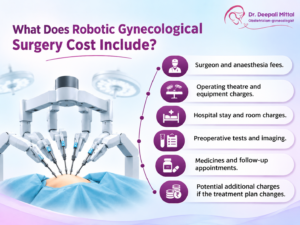
The cost of Robotic Gynecological Surgery in Indore can vary considerably. It depends on the type of operation, hospital facilities, surgeon’s fees, anaesthesia, investigations, length of stay and postoperative care.
Robotic-assisted procedures may cost more than some conventional surgical options because of specialised equipment and related operating expenses. However, the total cost depends on the individual case and facility.
Before scheduling a procedure, patients can request a written estimate that clarifies:
- Surgeon and anaesthesia fees.
- Operating theatre and equipment charges.
- Hospital stay and room charges.
- Preoperative tests and imaging.
- Medicines and follow-up appointments.
- Potential additional charges if the treatment plan changes.
Patients should compare the complete treatment plan rather than choosing an operation based on price alone.
How to Choose the Best Gynecologist in Indore for Surgical Care
When searching for the Best Gynecologist in Indore, patients should look beyond online rankings or advertisements. The choice should be based on the doctor’s qualifications, relevant surgical experience, communication style and the facilities available for the required treatment.
Consider these points during your consultation:
- Qualifications and experience: Ask about the doctor’s training and experience with your particular condition.
- Treatment options: Understand whether medication, observation or alternative procedures may be appropriate.
- Surgical expertise: Ask which surgical approaches the doctor performs and how often they are used for your condition.
- Hospital facilities: Confirm that the facility has the required equipment, anaesthesia support and postoperative monitoring.
- Risks and recovery: Ask about possible complications, recovery expectations and follow-up care.
- Transparent costs: Request a clear estimate and understand what is included.
Women comparing specialists for Robotic Surgery in Indore should specifically verify whether the doctor performs robotic-assisted procedures and at which hospital. A clinic offering gynecological consultations does not necessarily have robotic surgical equipment on-site.
Women’s Healthcare in Vijay Nagar, Indore
Access to appropriate Women’s Healthcare in Vijay Nagar, Indore can help women seek evaluation for menstrual concerns, pelvic pain, fibroids, ovarian cysts and other gynecological conditions. Timely assessment can help identify the cause of symptoms and determine whether observation, medication or a procedure is needed.
Dr. Deepali Mittal’s clinic address has been provided as 330 AD, opposite St. Arnold School, Vijay Nagar, Scheme No. 74C, Indore, Madhya Pradesh 452010. Women looking for a Gynecologist in Vijay Nagar, Indore can confirm consultation availability, services and appointment details directly with the clinic.
Patients searching for a Gynecologist in Scheme No. 74C, Indore should confirm whether the clinic provides the specific evaluation or treatment they need. If robotic-assisted surgery is being considered, ask where the operation would take place, which surgeon would perform it and whether the necessary facilities are available.
Questions to Ask Your Doctor Before Surgery
A consultation is an opportunity to understand the proposed treatment and make an informed decision. Consider asking:
- What is the exact diagnosis, and why is surgery being considered?
- Are there non-surgical options?
- Why do you recommend robotic-assisted, laparoscopic or open surgery in my case?
- What benefits and risks should I understand?
- Who will perform the operation, and where will it take place?
- What will the estimated total cost include?
- How long might hospitalisation and recovery take?
- What restrictions will I have after surgery?
- Which symptoms should prompt urgent medical attention?
- What follow-up care will be required?
These questions help patients understand the treatment plan and decide whether they are comfortable proceeding.
Frequently Asked Questions About Robotic Gynecological Surgery in Indore
1. What is robotic gynecological surgery?
Robotic-assisted gynecological surgery is an operation in which a surgeon controls specialised instruments through a robotic system. It may be used for selected procedures involving the uterus, ovaries and other pelvic structures.
2. Is robotic gynecological surgery better than laparoscopic surgery?
Not in every case. Both approaches have potential benefits and limitations. The appropriate option depends on the condition, the complexity of surgery, available equipment and the surgeon’s experience.
3. Is robotic hysterectomy available in Indore?
Availability depends on the hospital and surgical team. Patients searching for Robotic Hysterectomy in Indore should confirm which facilities offer the procedure and discuss whether it is suitable for their condition.
4. Can uterine fibroids be treated with robotic surgery?
Selected fibroids may be treated surgically using a robotic-assisted approach where appropriate facilities and expertise are available. The treatment depends on the fibroids’ size, number, location, symptoms and the patient’s goals.
5. What is the recovery time after robotic gynecological surgery?
Recovery varies by procedure and individual health. Some patients resume light activities sooner after minimally invasive surgery, but the treating surgeon should provide a personalised timeline and activity restrictions.
6. Is robotic gynecological surgery safe?
It can be appropriate for selected patients when performed by a trained surgical team in a suitable facility. However, all operations carry risks, and robotic technology does not eliminate complications.
7. How much does robotic gynecological surgery cost in Indore?
The cost depends on the procedure, hospital, equipment, anaesthesia, investigations and length of stay. Patients should request a written estimate from the treating facility.
8. How do I choose the best gynecologist in Indore for surgery?
When choosing the Best Gynecologist in Indore, consider relevant qualifications, experience with the diagnosed condition, available treatment options, communication and access to suitable surgical facilities.
9. Where can I find a gynecologist in Vijay Nagar, Indore?
Patients can consult a Gynecologist in Vijay Nagar, Indore for an assessment of their symptoms and treatment options. Confirm the clinic’s current services and appointment availability before visiting.
10. Does every patient with fibroids or ovarian cysts need surgery?
No. Some fibroids and ovarian cysts can be monitored or managed without surgery. The appropriate plan depends on symptoms, investigation results and individual clinical circumstances.
Conclusion – Robotic Gynecological Surgery in Indore
Robotic Gynecological Surgery in Indore may be an option for selected gynecological conditions, but the most suitable treatment depends on the patient’s diagnosis, health and individual needs. Understanding the procedure, possible benefits, limitations, cost and recovery can help women prepare for a more informed discussion with their doctor.
Women exploring Minimally Invasive Gynecological Surgery should ask about all appropriate treatment options and the experience of the surgical team. Before planning robotic-assisted surgery, confirm that the procedure is available at the intended hospital and that the surgeon considers it suitable for the specific case. For women seeking Women’s Healthcare in Vijay Nagar, Indore, Dr. Deepali Mittal’s clinic can be contacted to confirm available gynecological consultations and treatment services. The availability of robotic-assisted procedures should be verified directly before publication or treatment planning.